Human Resource Management Yesterday and Today blog -1

Human resource
management is the process of acquiring, training, appraising, and compensating
employees, and of attending to their labor relations, health and safety, and
fairness concerns, (Gary Dessler, 2011) its directly involved with people in an
organization.
HRM is also about strategic,
integrated and coherent approach to the employment, development and well-being
of the people working in organizations. ( Michael Amstrong ,2009)
Human resource
management involves all management decisions and action that affect the nature
of the relationship between the organization and its employees – its human
resources. (Beer et al, 1984)
HRM comprises a set
of policies designed to maximize organizational integration, employee
commitment, flexibility and quality of work. (Guest, 1987) considering the above
mentioned various definitions we can come to a concussion of HRM is so
important to an organization to achieve its goals and plans, HR will also play
a major role by utilizing resources towards the organizational achievements.
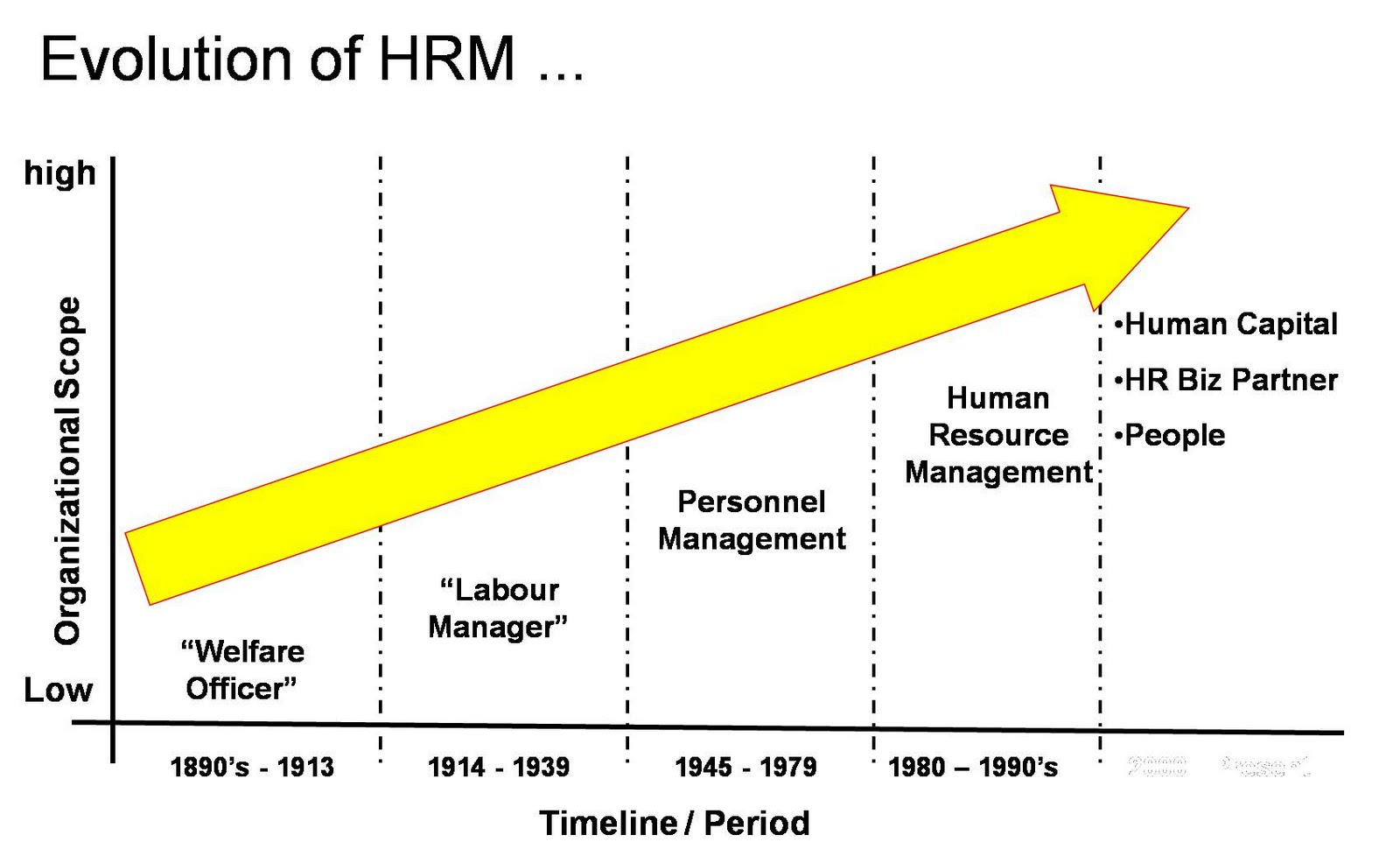
In nineteenth century
“ Welfare Officer” is in charge of welfare of the employees of an organization,
time to time the designations were changed due to the role of this Welfare
officer was extended to many development
and other areas, finally in twentieth century HR department converted as ‘ Human Capital dept “ which clearly shows
the intakes of very high values to this department .

For much of the
twentieth century, personnel/HR managers focused on day-to-day transactional
types of activities. For example, in the earliest firms, they first took over
hiring and firing from supervisors, ran the payroll department, and
administered benefits plans. ( Garry Dessler 2011). But today the HRM is more
concern on employee’s job role, efficiency, his carrier development and employees’
health, further the HRM invest in training and development of employees, OBT,
in field and in-house trainings which will help the employee to work in a comfortable
environment for a better expected outcome.
Reference
Garry Dessler (2011)
Human Resource management, 13th edition, Florida USA.
Becker, B.E., Huselid, M.A., Pickus, P.S., & Spratt, M.F.
(1997)
Guest D (1987) Human Resource
Management and Industrial Relations Journal of Management Studies 24, 503-521 .
Google Scholar, Crossref.
Armstrong,
M. (2009) Armstrong’s handbook of human resource management practice, 11th edition,
London .


Please add the time and date sfter the reference link
ReplyDeleteGood job,
ReplyDeleteBe careful when you make citation & reference.(Intext Citation of 6th paragraph, its should be Dessler, 2011 and also in the 1st of reference list should be Dessler, G (2011)
Incorrect referencing read the LMU referencing guide line dont miss lead others and my lecture notes
DeleteWe can clearly understand the evolution in HRM through time. Examples would add more value to the blog.
ReplyDeleteCut and paste rewrite please and re-reference please https://hrdictionary.files.wordpress.com/2012/10/evolution-of-hrm3.jpg dont want that reference and the graph its cut and paste again and not credible there authoritative sources on this view evolving HR such as Bersin of Deliottes Rewrite Please In text citation not meeting the requirements and references not Harvard Style
ReplyDeleteGood comparison. Be little cautious about referencing.
ReplyDelete